
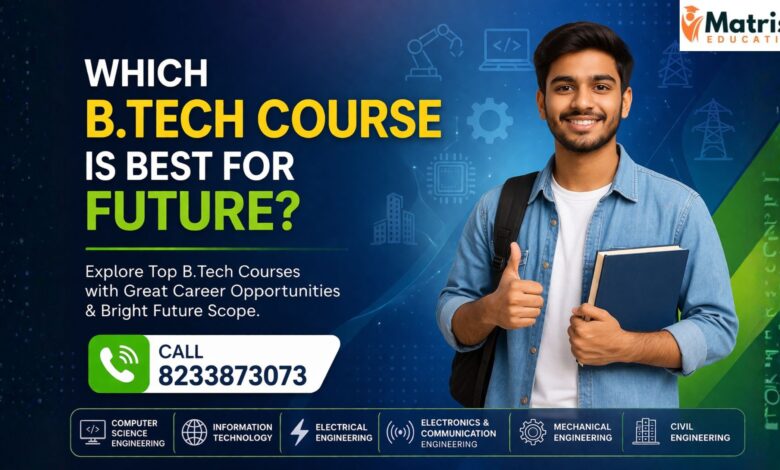
Choosing which B Tech course is best for future is one of the most important decisions you will make as a student. With India’s engineering sector growing rapidly and global technology demands shifting every year, picking the right branch can define your career for the next two decades. Whether you want a high-paying private sector job, a secure government position, or the freedom to start your own venture — the course you choose in B.Tech matters more than ever in 2026 and beyond.
In short: B.Tech in Computer Science Engineering (CSE), Artificial Intelligence & Machine Learning (AI/ML), Data Science, and Cybersecurity are the top choices for future growth. For government jobs, Civil, Electrical, and Mechanical Engineering still hold strong value. Read on to understand each branch in detail so you can make the right choice.
If you are still exploring admission options, check out the B.Tech Admission 2026 guide to understand eligibility, entrance exams, and important dates before shortlisting a course.
Confused About Which B.Tech Course to Choose?
Let Matrise Help You Decide!
Get expert guidance, explore the right branch for your goals, and enroll in a program built for your future — completely hassle-free.
- Free Counseling & Guidance
- No Technical Skills Required to Apply
- Flexible Online & Campus Modes
- Easy Admission Process
Which B Tech Course Is Best for Future: Top Branches in 2026
The job market in 2026 is driven by digital transformation, automation, and data-driven decision making. As a result, technology-focused B.Tech branches are seeing explosive demand from both Indian and global employers. Here are the top B.Tech courses you should consider:
- B.Tech in Computer Science Engineering (CSE) — The most popular and highest-placement branch in India
- B.Tech in Artificial Intelligence & Machine Learning (AI/ML) — Fastest-growing field with exceptional salary packages
- B.Tech in Data Science — High demand across every industry, from finance to healthcare
- B.Tech in Cybersecurity — Critical need as digital threats increase globally
- B.Tech in Electronics & Communication Engineering (ECE) — Strong in both private and government sectors
- B.Tech in Mechanical Engineering — Evergreen branch with solid PSU and defense job opportunities
- B.Tech in Civil Engineering — Best for UPSC IES and government infrastructure projects
- B.Tech in Electrical Engineering — Highly relevant for GATE, power sector PSUs, and Railways
You can explore the full list of B.Tech engineering programs available at Matrise to find the branch that aligns with your interest and career goals.
B.Tech Branch Comparison: Future Scope & Salary
Not all B.Tech branches offer the same career trajectory. Below is a quick comparison of the top branches based on industry demand, average salary, and future growth potential to help you decide which course is best in B.Tech for you.
| B.Tech Branch | Industry Demand | Avg. Starting Salary (LPA) | Govt Job Scope | Future Growth |
|---|---|---|---|---|
| CSE | Very High | 6 – 14 LPA | Moderate | Excellent |
| AI & ML | Very High | 8 – 18 LPA | Moderate | Excellent |
| Data Science | Very High | 7 – 15 LPA | Low–Moderate | Excellent |
| Cybersecurity | High | 6 – 14 LPA | Moderate (CERT, NIC) | Excellent |
| ECE | High | 4 – 10 LPA | High (BSNL, DRDO) | Strong |
| Civil Engineering | Moderate–High | 3 – 8 LPA | Very High (IES, PWD) | Strong |
| Mechanical Engg. | Moderate | 3 – 8 LPA | Very High (PSUs, ISRO) | Strong |
| Electrical Engg. | Moderate | 3 – 9 LPA | Very High (GATE PSUs) | Strong |
B.Tech Course Computer Science and Engineering: Why It Leads
When students ask which course is best in B.Tech, Computer Science Engineering (CSE) is almost always at the top of the list — and for good reason. CSE graduates are hired by top companies including Google, Microsoft, Amazon, TCS, Infosys, and hundreds of product-based startups. The average package for CSE freshers from reputed colleges ranges from ₹6 to ₹14 LPA, while top performers from IITs regularly receive packages of ₹35 LPA and above.
The scope of CSE goes far beyond software development. Graduates enter fields like cloud computing, DevOps, full-stack development, product management, and UI/UX design. B.Tech CSE also opens doors to M.Tech, MBA, and even UPSC Civil Services — making it one of the most versatile branches available. The core subjects — data structures, algorithms, operating systems, and databases — build a strong analytical foundation useful in any field.
- Highest campus placement rates in India
- Strong eligibility for IT Officer roles in banks and government agencies
- Gateway to premium postgraduate programs like IIT M.Tech and IIM MBA
- Relevant to emerging fields: AI, cloud, blockchain, and web3
Which BTech Branch Is Best for Government Jobs and UPSC
If your goal is a secure government career, then Civil, Electrical, and Mechanical Engineering are the best B.Tech branches to consider. These branches are the primary eligibility requirement for the UPSC Indian Engineering Services (IES/ESE) exam — one of the most prestigious government exams for engineers in India. IES officers work in departments like Railways, CPWD, CWC, and Border Roads Organisation with excellent salaries and job security.
Beyond UPSC, engineering graduates from any branch can appear for SSC JE (Junior Engineer), RRB JE (Railway JE), state PSC exams, and GATE for PSU recruitment. Branches like Electrical and Electronics Engineering are particularly valued in BSNL, DRDO, ISRO, NTPC, and ONGC. If UPSC Civil Services (IAS/IPS) is your dream, note that any B.Tech branch makes you eligible — it is a matter of preparation, not branch.
- UPSC IES: Civil, Mechanical, Electrical, Electronics & Telecom
- GATE PSUs: All branches — especially ECE, EEE, Mechanical, Civil, CSE
- Railways (RRB JE/SSE): Civil, Mechanical, Electrical, Signal & Telecom
- Defence (CDS/NDA/TES): Open to all engineering graduates
- ISRO/DRDO: Mechanical, ECE, CSE, Aerospace
Which Course Is Best for Future in Engineering: Emerging Branches
Apart from traditional branches, several new-age B.Tech specializations are growing rapidly and offer excellent future scope. If you want to enter industries that will define the next 20 years, consider these emerging options. According to recent data, AI and Data Science are among the highest-paying B.Tech courses in 2026 with very high industry demand and excellent future growth potential.
- B.Tech in Artificial Intelligence & Machine Learning: Powers everything from chatbots to autonomous vehicles. Starting packages of ₹8–18 LPA.
- B.Tech in Data Science: Businesses across all sectors now need data professionals. High demand in finance, healthcare, and e-commerce.
- B.Tech in Cybersecurity: As India’s digital economy grows, cybersecurity engineers are critically needed in banks, government, and IT firms.
- B.Tech in Cloud Computing: AWS, Azure, and Google Cloud skills are in enormous demand. Strong salary potential globally.
- B.Tech in Internet of Things (IoT): Smart cities, connected devices, and industrial automation are driving IoT demand rapidly.
- B.Tech in Blockchain Technology: Emerging in fintech, supply chain, and digital identity — a niche but high-paying specialization.
For an in-depth look at how these specializations compare and which one suits your aptitude, read this helpful guide on which course is best for the future in B.Tech from industry experts.
B.Tech Admission: How to Apply Online
Getting into a good B.Tech program requires planning. Most colleges in India admit students through national or state-level entrance exams. Here is a step-by-step overview of the B.Tech admission process:
- Choose your preferred branch and college type (IIT, NIT, private, or deemed university)
- Appear for entrance exams: JEE Main, JEE Advanced (IITs), BITSAT, VITEEE, SRMJEEE, MET, or state-level CET exams
- Check eligibility: 10+2 with Physics, Chemistry, and Mathematics. Minimum 45–60% marks (varies by college)
- Fill the application form on the official college or exam portal
- Participate in counseling rounds (JoSAA for IITs/NITs, state counseling for private colleges)
- Confirm your seat, pay fees, and complete document verification
For detailed 2026 admission dates, eligibility criteria, and application steps, refer to the official B.Tech Admission 2026 guide. Early preparation can significantly improve your chances of getting into your preferred branch and college.
B.Tech Online Course Free with Certificate: Upskill While You Study
One major advantage of pursuing B.Tech today is the availability of free and low-cost online courses that complement your degree. Platforms like NPTEL (by IITs and IISc), Coursera, edX, and Google offer certificate courses in AI, data science, cloud computing, and cybersecurity that can significantly boost your resume. Many B.Tech students use these platforms to learn practical skills beyond their college curriculum.
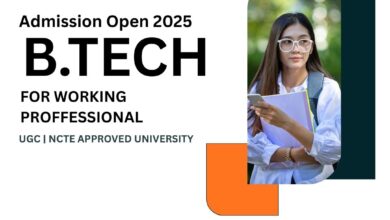
If you are already working and want to upgrade your qualification, Matrise offers a specialized B.Tech program for working professionals that allows you to earn your engineering degree without leaving your job. This flexible model is ideal for diploma holders and working individuals looking to advance their careers with a full B.Tech credential.
- NPTEL: Free IIT-level courses with paid certificates — highly recognized by employers
- Coursera / edX: Audit courses for free; pay only for certificates
- Google / Microsoft Learn: Free cloud and AI certifications
- SWAYAM: India’s national MOOCs platform with UGC-recognized credits
B.Tech Course College Near Me: Government vs. Private Colleges
Your choice of college matters as much as your choice of branch. IITs, NITs, and IIITs are the gold standard for engineering education in India, offering world-class infrastructure, research exposure, and top placement packages. However, competition for these institutions is intense, and not everyone can secure a seat through JEE. That is where reputed private and deemed universities come in — many of them offer industry-relevant curricula, strong placement cells, and modern labs at a fraction of the cost of private coaching.
When searching for a B.Tech course college near you, consider these key factors:
- NAAC and NBA accreditation status
- Campus placement history (average & highest package)
- Faculty qualifications and research output
- Industry partnerships and internship programs
- Infrastructure, labs, and online learning support
Explore the B.Tech program details at Matrise to know more about curriculum, specializations, eligibility, and fee structure before making your final decision.
B.Tech Course Private vs. Government College: Which Is Better?
The debate between government and private B.Tech colleges is common among students and parents. Government colleges (IITs, NITs, government-funded universities) offer lower fees, strong alumni networks, and high brand value. Private colleges, on the other hand, offer more flexible admissions, modern infrastructure, industry tie-ups, and diverse course offerings including newer branches like AI/ML and Data Science that some government colleges are still introducing.
For students who cannot crack JEE but want quality engineering education, a NAAC A-accredited private university is a smart choice. Look for colleges with strong placement records, industry-relevant labs, and faculty with real-world experience. The key is research — don’t choose a college based solely on proximity or fee — check placements and accreditation first.
Whether you are a fresh 12th pass student or a working professional looking to upskill, Matrise provides flexible B.Tech options including lateral entry and working professional programs that fit your schedule and career goals.
Is B.Tech a Good Choice for Freshers in 2026?
Yes — B.Tech is absolutely a good choice for freshers in 2026, but only if you pick the right branch and invest in skill development alongside your degree. The Indian IT industry, infrastructure sector, manufacturing, and emerging tech space are all actively hiring fresh B.Tech graduates. Companies like TCS, Infosys, Wipro, HCL, and hundreds of startups recruit B.Tech freshers every year through campus placement drives.
For B.Tech freshers, the first step is to build a strong foundation in your chosen branch during your first two years, and then use the remaining years to do internships, contribute to open-source projects, build a portfolio, and earn relevant certifications. Students in CSE and AI/ML branches who start coding early and build projects tend to receive significantly better placement offers than those who rely on textbook learning alone.
- Start coding / core engineering practice from Year 1 itself
- Take on internships in Semester 5 or 6 to gain real-world exposure
- Build a GitHub portfolio (for tech branches) or design projects (for core branches)
- Prepare for GATE, CAT, or UPSC alongside your degree if you want PSU/MBA options
- Join college technical clubs and hackathons for networking and exposure
Frequently Asked Questions (FAQs)
Ready to Enroll in the Best B.Tech Course for Your Future?
Join thousands of students and working professionals who have already chosen Matrise for their B.Tech journey. Sign up today — it’s free to get started!
- Free Registration
- Expert Counseling Included
- Online & Flexible Programs
- UGC-Recognized Degree


One Comment