
ANM nursing course is a 2-year diploma program in Auxiliary Nurse Midwifery. It trains students in basic nursing care, maternal health, and community healthcare. This course is one of the most popular entry-level nursing programs in India. It opens doors to government and private healthcare jobs after 12th grade.
Every year, thousands of students — especially young women from rural and urban areas — choose the ANM course as their first step into the healthcare sector. The course is affordable, practical, and highly in demand. From primary health centers to government hospitals, ANM-trained nurses play a vital role across India’s healthcare system. In this guide, Matrise brings you every detail you need to make an informed decision about this rewarding career path.
What is the ANM Nursing Course?
The ANM full form is Auxiliary Nurse Midwifery. It is a diploma-level healthcare course recognized by the Indian Nursing Council. The course prepares students to deliver basic nursing care, promote health, and assist in maternal and child healthcare.
ANM nurses typically work at the grassroots level of India’s healthcare system. They serve in primary health centers, government hospitals, clinics, and community health programs. Their role is especially critical in rural and semi-urban areas where access to advanced medical care is limited.
The course focuses on building practical skills. Students learn about nutrition, first aid, vaccination programs, and maternal support. After completing ANM training, graduates are equipped to provide essential healthcare services independently within their communities, following WHO standards for nursing and midwifery practice.
Key Highlights of ANM Nursing
| Feature | Details |
|---|---|
| Course Type | Diploma |
| Duration | 2 Years |
| Eligibility | 10+2 (Science preferred) |
| Government Fees | ₹5,000 – ₹30,000/year |
| Private Fees | ₹30,000 – ₹1,00,000/year |
| Top Job Roles | Staff Nurse, Community Health Worker, Home Nurse |
| Average Starting Salary | ₹10,000 – ₹18,000/month |
ANM Nursing Course Eligibility Criteria
Before applying, every student must check the ANM nursing eligibility criteria carefully. Meeting these requirements is the first step toward a successful admission.
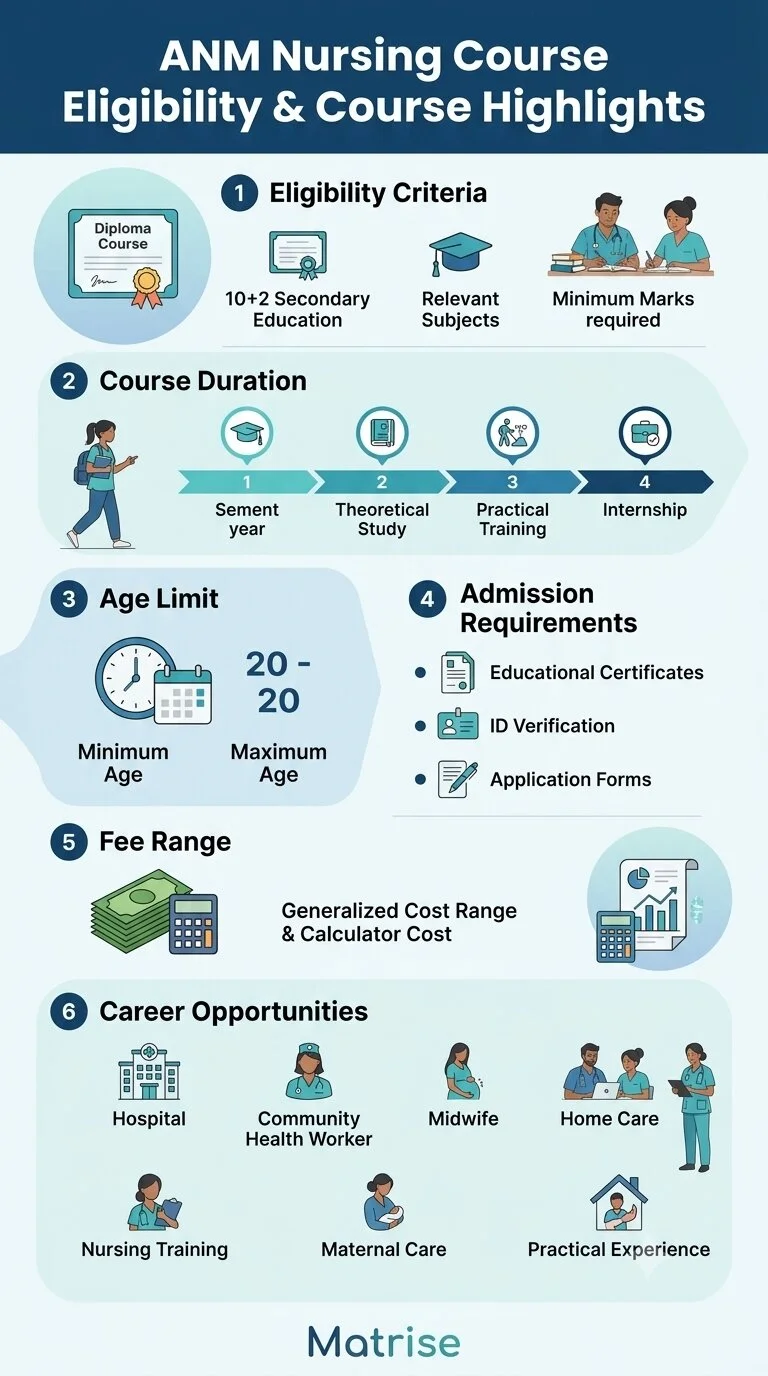
The basic qualification needed is completion of Class 12 (10+2) from a recognized board. Most colleges prefer students from the Science stream. However, some states also accept students from Arts or Commerce backgrounds. The minimum marks required are usually 45% to 50% in aggregate, although this varies across institutions.
Regarding age, most states require candidates to be between 17 and 35 years of age at the time of admission. Reserved category candidates often receive age relaxation as per state government rules.
Can Students Apply After 10th or 12th?
This is one of the most common questions among aspiring nursing students. In most states, the minimum qualification for ANM admission is Class 12 (10+2). However, some older state-specific regulations still allow Class 10 pass students to apply in certain government schemes.
Currently, the standard practice across most institutions follows the 12th-pass requirement. Students with a Science background — especially with Biology — are often preferred. But students from other streams are also eligible in several states. Always check the specific rules of your state nursing council before applying.
Medical Fitness and Other Requirements
Candidates must be medically fit to pursue the ANM course. A medical fitness certificate from a registered doctor is usually required at the time of admission.
Important documents typically required include:
- Class 10 and 12 marksheets and certificates
- Transfer certificate from last attended school or college
- Date of birth proof (Aadhaar card or birth certificate)
- Caste or category certificate (if applicable)
- Medical fitness certificate
- Passport-size photographs
- Domicile certificate (for state quota seats)
ANM Nursing Admission Process
The ANM nursing admission process varies slightly between government and private colleges. However, the overall steps are similar across most states in India.
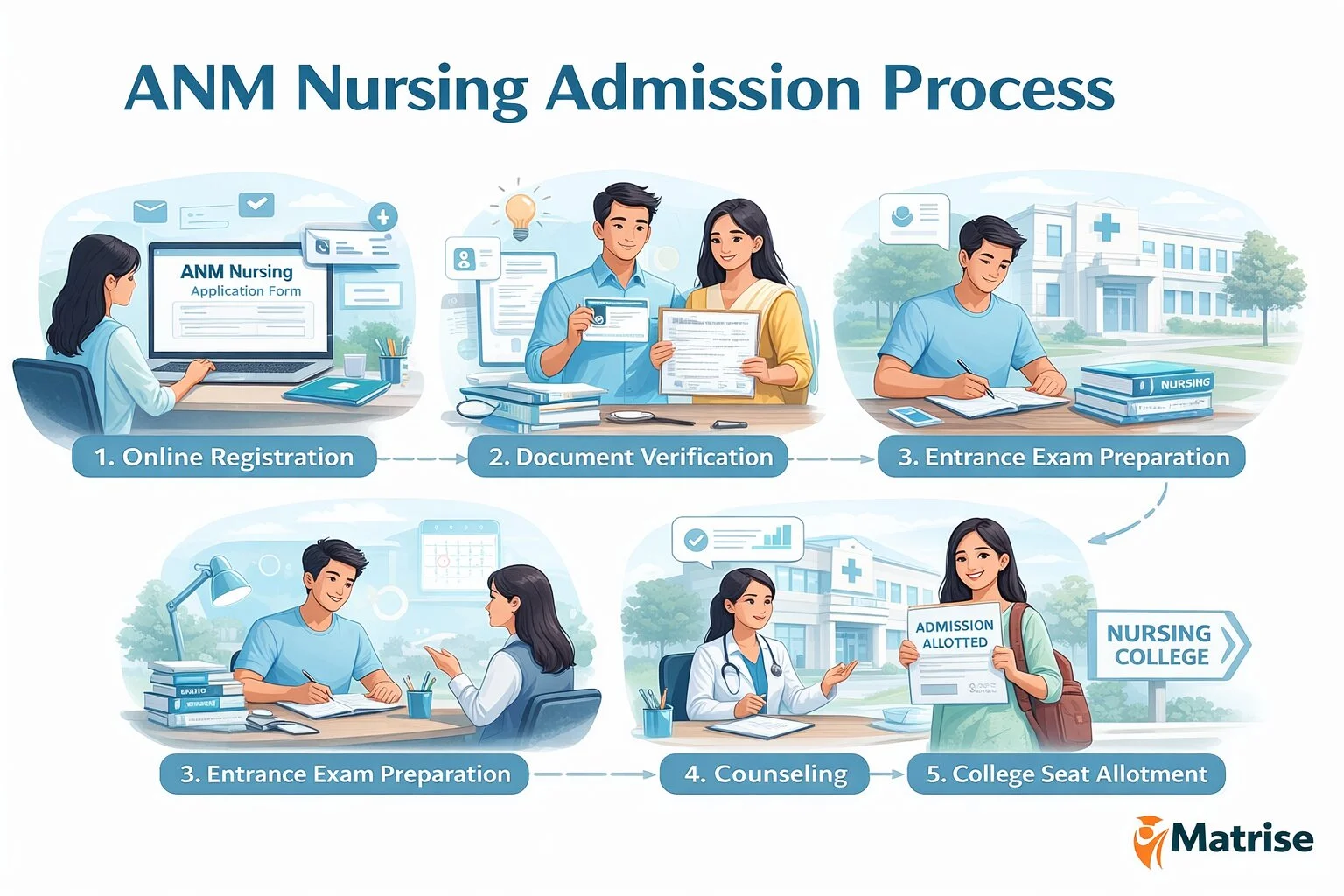
Government colleges often conduct admissions through state-level counseling based on merit. Private institutes may conduct their own entrance tests or accept students based on Class 12 marks. Either way, the process typically includes online registration, form submission, result or merit list declaration, and document verification during counseling.
Admissions usually open between June and September each year. Always check official state nursing council websites for exact dates and notifications.
Entrance Exams for ANM Nursing
Several states conduct entrance exams for ANM nursing admissions. Some of the common ones include:
- RUHS Nursing Entrance Exam (Rajasthan)
- BFUHS Nursing Entrance Test (Punjab)
- UP State Nursing Entrance Exam
- Odisha OJEE Nursing Exam
Many government colleges offer direct merit-based admissions without entrance exams. In such cases, Class 12 marks are the deciding factor.
Step-by-Step Admission Process
- Step 1 – Online Registration: Visit the official state nursing council or college website. Fill in the registration form with your basic details.
- Step 2 – Form Submission: Upload required documents and pay the application fee online.
- Step 3 – Entrance Exam or Merit List: Appear for the entrance exam if required. Otherwise, wait for the merit list to be published.
- Step 4 – Counseling: Attend the counseling session as per the schedule. Choose your preferred college based on rank and seat availability.
- Step 5 – Seat Allotment and Joining: Pay the admission fee and submit original documents at the allotted college.
ANM Nursing Course Duration and Training Structure
The ANM nursing duration is 2 years. This includes both classroom learning and practical field training. The structure is designed to make students job-ready from day one of their graduation.
The first year focuses on theory subjects like community health nursing, nutrition, and health promotion. The second year shifts more toward clinical practice and hands-on patient care. After completing both years, students must complete a mandatory internship or fieldwork component.
This balance of theory and practice ensures that ANM graduates are confident and skilled when they enter the workforce.
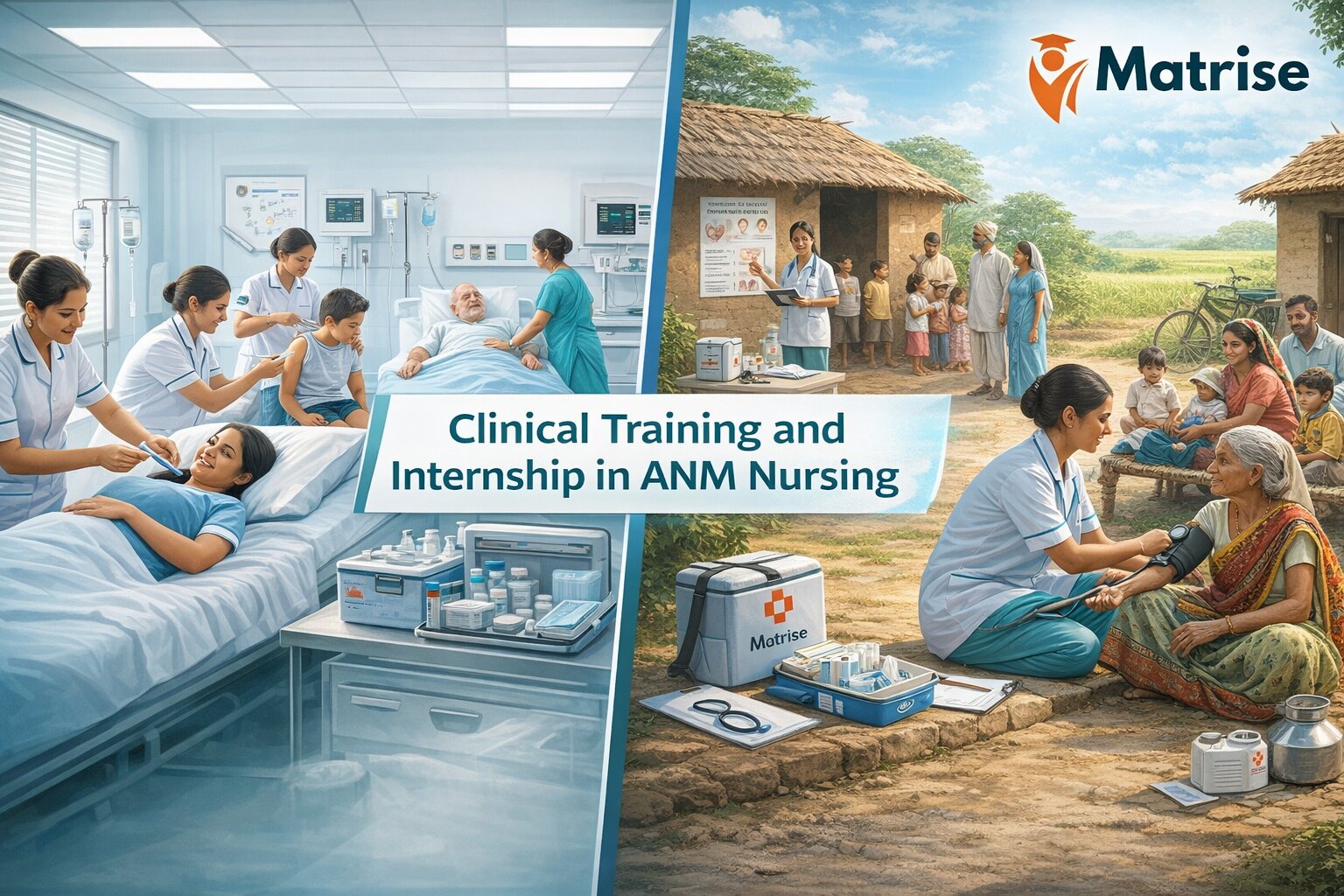
Clinical Training and Internship
Clinical training is a crucial part of the ANM course. Students spend significant time in hospital wards, community health centers, and maternity units. Key training areas include:
- Hospital ward duties and patient care
- Community healthcare visits and awareness programs
- Maternal and child healthcare practice
- Vaccination and immunization support
- Basic first-aid procedures and emergency response
This real-world exposure makes the course highly practical and prepares students for the actual demands of the healthcare sector.
ANM Nursing Course Fees in Government and Private Colleges
One of the biggest advantages of the ANM course is its affordability. Compared to B.Sc Nursing or other medical programs, ANM course fees are much lower. This makes it accessible to students from all economic backgrounds.
To further understand nursing course fee structures, you can also explore the GNM Nursing Course Fees 2026 – Government & Private College Fee Structure, which provides a helpful comparison across related diploma programs.
Government vs Private College Fees
| College Type | Annual Fees | Total Course Fees |
|---|---|---|
| Government College | ₹5,000 – ₹30,000 | ₹10,000 – ₹60,000 |
| Private College | ₹30,000 – ₹1,00,000 | ₹60,000 – ₹2,00,000 |
| Hostel Charges (approx.) | ₹20,000 – ₹50,000/year | Varies by location |
Scholarships and Financial Support
Students from reserved categories (SC, ST, OBC) can avail state government scholarships that cover tuition fees partially or fully. Several minority scholarship schemes are also available for eligible students.
Additionally, nationalized banks offer education loans for nursing courses. Students can also check the National Scholarship Portal (NSP) for central government scholarship opportunities. Financial support makes the ANM course even more accessible to students from all backgrounds.
ANM Nursing Course Syllabus and Subjects
The ANM nursing syllabus is structured across two academic years. It covers a wide range of healthcare topics. The curriculum is approved by the Indian Nursing Council and followed by institutions across India.
According to professional nursing standards in India established by premier institutions, the ANM curriculum integrates theory with practical field exposure to develop well-rounded healthcare workers.
Core Subjects in ANM Nursing
- Community Health Nursing – Basics of public health and disease prevention
- Health Promotion and Education – Spreading awareness in communities
- Child Health Nursing – Care of newborns and growing children
- Midwifery – Assisting during pregnancy and childbirth
- Nutrition and Dietetics – Importance of balanced diet in health
- First Aid and Emergency Care – Quick response in urgent situations
- Environmental Hygiene – Sanitation and safe water practices
- Primary Medical Care – Handling minor illnesses and injuries
Practical Skills Students Learn
- Administering injections and dressings
- Basic patient care and monitoring vital signs
- Providing maternal care support during and after delivery
- Conducting health awareness campaigns in rural communities
- Assisting in immunization and vaccination drives
- Maintaining patient records and health documentation
Skills Required for Success in ANM Nursing
Technical knowledge alone is not enough to succeed in nursing. ANM professionals need a strong set of personal and interpersonal skills to thrive in their careers.
Effective communication is essential. Nurses interact with patients, families, and doctors every day. They need to explain health information clearly and calmly. Emotional stability is equally important. Working in healthcare can be stressful. Therefore, nurses must manage pressure without compromising on patient care quality.
Teamwork and discipline are also critical. ANM nurses often work as part of a larger healthcare team. Being reliable and following protocols ensures better patient outcomes.
Important Personal Qualities for Nurses
- Patience and Compassion: Every patient needs care and understanding
- Attention to Detail: Small errors in healthcare can have serious consequences
- Hygiene and Responsibility: Maintaining cleanliness protects both patients and nurses
- Quick Decision-Making: Emergencies require fast and accurate responses
- Empathy: Understanding a patient’s feelings improves care quality

Career Opportunities After ANM Nursing
Completing the ANM course opens up a wide range of ANM nursing jobs in both public and private sectors. The demand for trained ANM nurses continues to grow across India, especially in rural and semi-urban areas.
Government healthcare programs like the National Health Mission (NHM) regularly recruit ANM-qualified professionals. Private hospitals, maternity clinics, and NGOs also hire ANM graduates for various roles. According to the National Health Mission under the Ministry of Health and Family Welfare, ANM workers form the backbone of India’s community health delivery system.
Top Job Roles After ANM
- Staff Nurse – Providing patient care in hospitals and clinics
- Community Health Worker – Delivering health services in rural areas
- Rural Health Worker – Working under government health programs
- Home Nurse – Offering in-home patient care services
- Maternity Assistant – Supporting pregnant women and new mothers
- Health Educator – Spreading disease awareness in communities
Government Job Opportunities
ANM graduates are eligible for several government-sector jobs. These positions offer job security, fixed salaries, and attractive benefits. Key government job areas include:
- Primary Health Centers (PHCs) across rural areas
- State and district government hospitals
- State health departments and public health programs
- National Health Mission (NHM) recruitment drives
- Sub-centers managed by state health departments
Salary After ANM Nursing
The ANM nursing salary depends on several factors including the type of employer, location, and years of experience. However, even as a fresher, ANM nurses earn a stable income that grows steadily over time.
For more data-driven insight on nursing salary expectations and career growth, verified salary reports from education and career platforms provide a helpful benchmark for students planning their futures.
Salary Based on Experience
| Experience Level | Monthly Salary Range |
|---|---|
| Fresher (0–1 year) | ₹10,000 – ₹18,000 |
| Mid-level (2–5 years) | ₹18,000 – ₹28,000 |
| Experienced (5+ years) | ₹28,000 – ₹45,000+ |
| Government Sector (NHM) | ₹15,000 – ₹25,000 |
In Assam, the salary of an ANM nurse in the government sector typically ranges from ₹14,000 to ₹22,000 per month, depending on the posting location and years of service.
Factors Affecting ANM Salary
- Government vs Private Job: Government jobs offer more stability while private jobs may offer higher initial pay in metro cities
- City and State: Salaries in metro cities are higher than in rural postings
- Skill Level and Experience: More experience directly translates to higher pay
- Additional Certifications: Specialized training can boost earning potential significantly
Higher Education Options After ANM Nursing
The ANM diploma is not the end of the road. In fact, it is just the beginning. Students who want to grow further in their nursing careers have several excellent options for higher education.
After completing ANM, students can advance to a 3-year GNM Nursing Course to expand their clinical skills and qualify for senior nursing positions. GNM provides broader training and better earning potential compared to ANM alone.
Courses Students Can Pursue After ANM
- GNM Nursing (3 years): A natural next step for ANM graduates
- B.Sc Nursing (4 years): Degree-level program with advanced clinical training
- Post Basic B.Sc Nursing: Faster route to a degree for diploma holders
- M.Sc Nursing: Master’s level for teaching and research roles
- Specialized Healthcare Certifications: Dialysis, ICU care, operation theater technician courses
Students in Uttar Pradesh exploring other diploma pathways in healthcare can also look at paramedical diploma programs through JEECUP, which covers multiple diploma pathways including pharmacy and health-related courses.
Benefits of Higher Studies
- Significantly better salary opportunities across all sectors
- Eligibility for senior nursing and supervisory positions
- Expanded clinical knowledge and specialization
- Eligibility for teaching, administration, and research roles
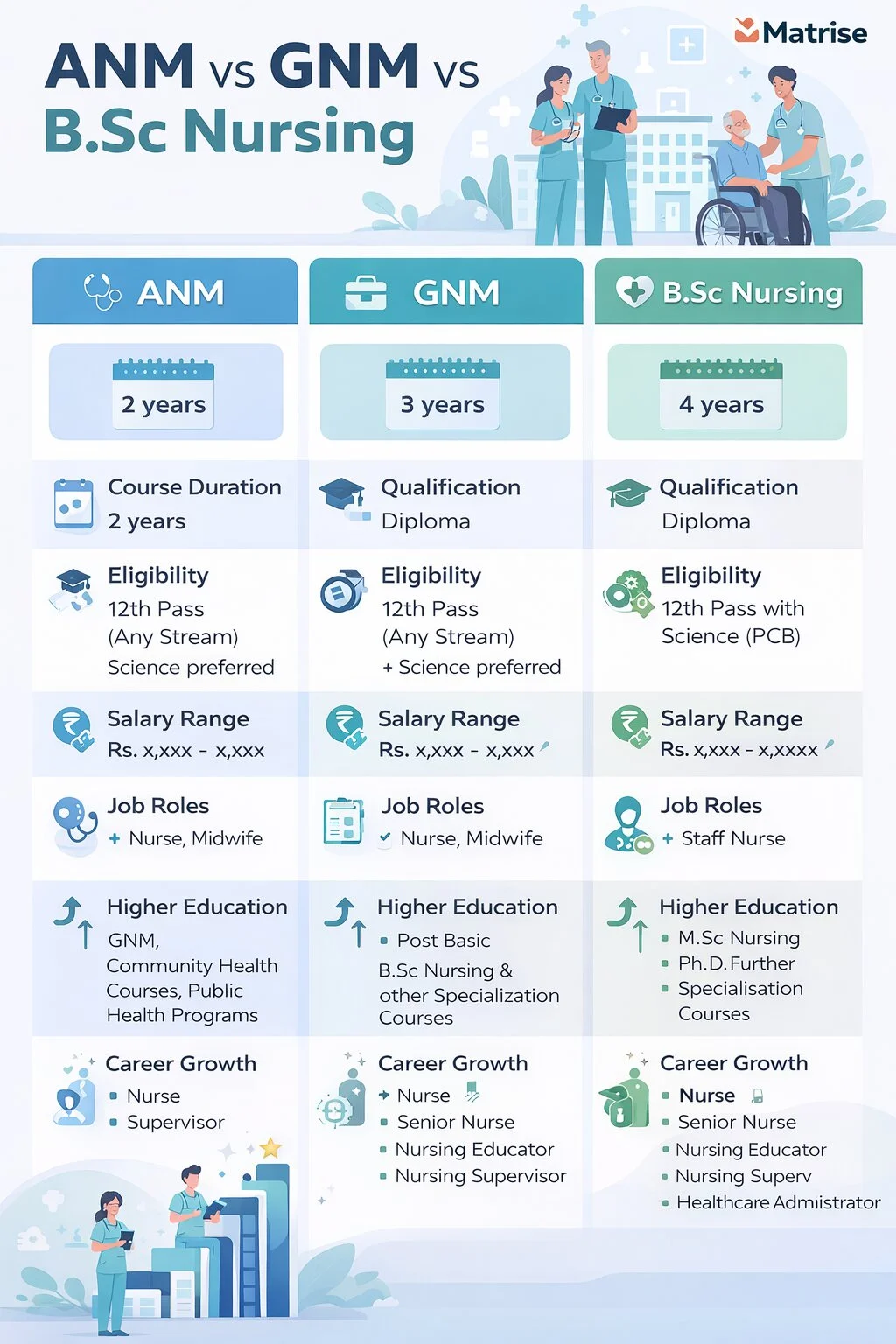
Difference Between ANM, GNM, and B.Sc Nursing
Many students find it confusing to choose between ANM, GNM, and B.Sc Nursing. Understanding the key differences helps students pick the right path based on their goals, budget, and career aspirations.
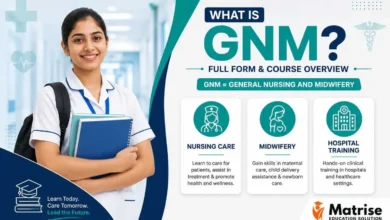
Both ANM and GNM are diploma-level nursing programs serving rural healthcare needs. However, they differ in scope and depth. You can explore the complete General Nursing and Midwifery diploma details to understand how GNM expands on ANM foundations, offering degree-level advancement for serious nursing career aspirants.
ANM vs GNM
| Criteria | ANM | GNM |
|---|---|---|
| Course Level | Diploma | Diploma |
| Duration | 2 Years | 3.5 Years |
| Job Scope | Community Health | Hospital + Community |
| Average Salary | ₹10,000 – ₹25,000 | ₹15,000 – ₹35,000 |
| Higher Studies | GNM or B.Sc Nursing | Post Basic B.Sc Nursing |
ANM vs B.Sc Nursing
| Criteria | ANM | B.Sc Nursing |
|---|---|---|
| Course Level | Diploma | Degree |
| Duration | 2 Years | 4 Years |
| Fees | Lower | Higher |
| Career Scope | Entry-level nursing | Advanced clinical roles |
| Best For | Quick entry into healthcare | Long-term nursing career |
In short, GNM is better for those who want broader hospital-based nursing experience. ANM is ideal for students seeking a quick, affordable entry into community healthcare. B.Sc Nursing suits those aiming for advanced clinical or academic careers. There is no single “best” option — it depends entirely on your goals and resources.
Best Colleges for ANM Nursing in India
Choosing the right college is as important as choosing the right course. A good ANM college should be recognized by the Indian Nursing Council and affiliated with a valid state nursing council or university.
Government ANM colleges remain the top choice for most students due to their lower fees, experienced faculty, and strong hospital tie-ups. Private colleges with proper accreditation are also a solid option, especially for students who want flexible locations or faster admission processes.
How to Choose the Right ANM College
- Accreditation and Recognition: Always verify INC and state nursing council approval
- Placement Support: Check if the college has tie-ups with hospitals for placement
- Practical Training Quality: Ensure the college has an attached hospital for clinical training
- Hostel and Campus Facilities: Check accommodation options for outstation students
- Faculty Experience: Experienced faculty make a huge difference in nursing education
Important Approvals to Check
- Indian Nursing Council (INC): The apex regulatory body for nursing education in India
- State Nursing Council: Each state has its own nursing regulatory authority
- Affiliated University or Board: Ensures the diploma is valid for government job applications
Career Scope and Future Demand of ANM Nurses
The future looks bright for ANM-trained professionals. India’s healthcare sector is expanding rapidly. Government spending on rural health infrastructure continues to grow year after year. This directly increases the demand for community-level healthcare workers, including ANM nurses.
Additionally, increasing awareness around maternal health, child immunization, and preventive care is creating new opportunities. Elder care and home healthcare are also emerging as fast-growing sectors where ANM professionals can find meaningful work.
Industries Hiring ANM Professionals
- Government and private hospitals
- Clinics and diagnostic centers
- Non-governmental organizations (NGOs)
- Community health centers and sub-centers
- Home healthcare agencies
- School health programs
Future Trends in Nursing Careers
- Telehealth Support Roles: Nurses supporting remote patient monitoring and teleconsultation
- Preventive Healthcare Demand: Focus shifting from treatment to prevention in all communities
- Government Healthcare Expansion: New PHCs, sub-centers, and health wellness centers being opened
- Maternal Healthcare Focus: Increasing awareness of safe childbirth and antenatal care
- Elder Care Growth: India’s aging population creating new healthcare needs
Frequently Asked Questions About ANM Nursing Course
Which is better — GNM or ANM?
GNM (General Nursing and Midwifery) is a broader course covering more clinical areas than ANM. GNM nurses have access to more job opportunities in hospitals and earn higher salaries. However, ANM is a faster, cheaper option for those who want to enter community healthcare quickly. If career growth is your priority, GNM is the better choice. If affordability and speed matter more, ANM is an excellent starting point.
What is the salary of an ANM nurse in Assam?
In Assam, ANM nurses working in government hospitals and health centers typically earn between ₹14,000 and ₹22,000 per month. Those hired under the National Health Mission (NHM) may earn a contractual salary in the same range. Private sector salaries in Assam are slightly lower, usually starting at ₹10,000 to ₹15,000 per month for freshers.
How much are ANM course fees?
ANM course fees in government colleges typically range from ₹5,000 to ₹30,000 per year. Private college fees range from ₹30,000 to ₹1,00,000 per year. The total course cost over 2 years is between ₹10,000 and ₹2,00,000 depending on the institution. Scholarships and financial aid can further reduce the cost for eligible students.
What is the ANM course duration?
The ANM course duration is 2 years. This includes both classroom learning and practical training. After the 2 years, students must complete a mandatory internship or fieldwork component. Some institutions include this internship within the 2-year structure, while others require it as an additional period of 6 months before certification.
Is ANM a government job?
ANM itself is a qualification, not a job title. However, ANM graduates are eligible for government jobs in the healthcare sector. Government organizations like the National Health Mission, Primary Health Centers, and state health departments regularly recruit ANM-qualified nurses. These are stable, salaried positions with government benefits. Both contractual and permanent government jobs are available for ANM graduates.
Is ANM good for girls?
Yes, the ANM course is particularly designed for female candidates. It is one of the most recommended healthcare courses for women in India. It offers stable government job opportunities, a respected role in society, and the flexibility to work in both urban and rural settings. The course duration is short, fees are affordable, and the demand for ANM nurses remains consistently high across India.
What are the 5 levels of nurses?
In India, nursing levels are broadly categorized as: (1) ANM – entry-level community healthcare worker, (2) GNM – diploma-level clinical nurse, (3) B.Sc Nursing – undergraduate degree nurse, (4) M.Sc Nursing – postgraduate specialized nurse, and (5) Nurse Practitioner/Nursing Administrator – senior or specialized healthcare professional. Each level builds on the previous one, offering more responsibilities and better pay.
Start Your Nursing Journey with Matrise
Choosing the right nursing course is one of the most important decisions of your life. The ANM nursing course is a powerful first step toward a stable, fulfilling, and meaningful career in healthcare. It is affordable, practical, and in high demand across India.
Matrise is here to make your journey easier. Whether you need help understanding eligibility requirements, finding the right college, preparing for entrance exams, or planning your next step after ANM, Matrise provides reliable, updated guidance every step of the way.
From understanding course details to comparing ANM with GNM or B.Sc Nursing, Matrise gives you the complete information you need to make confident decisions. The healthcare sector needs dedicated professionals, and your ANM journey can be the beginning of a career that truly makes a difference.
Ready to take the next step? Explore more nursing career guides on the Matrise blog. Get the facts, compare your options, and start building the future you deserve in Indian healthcare.
“`html “`