
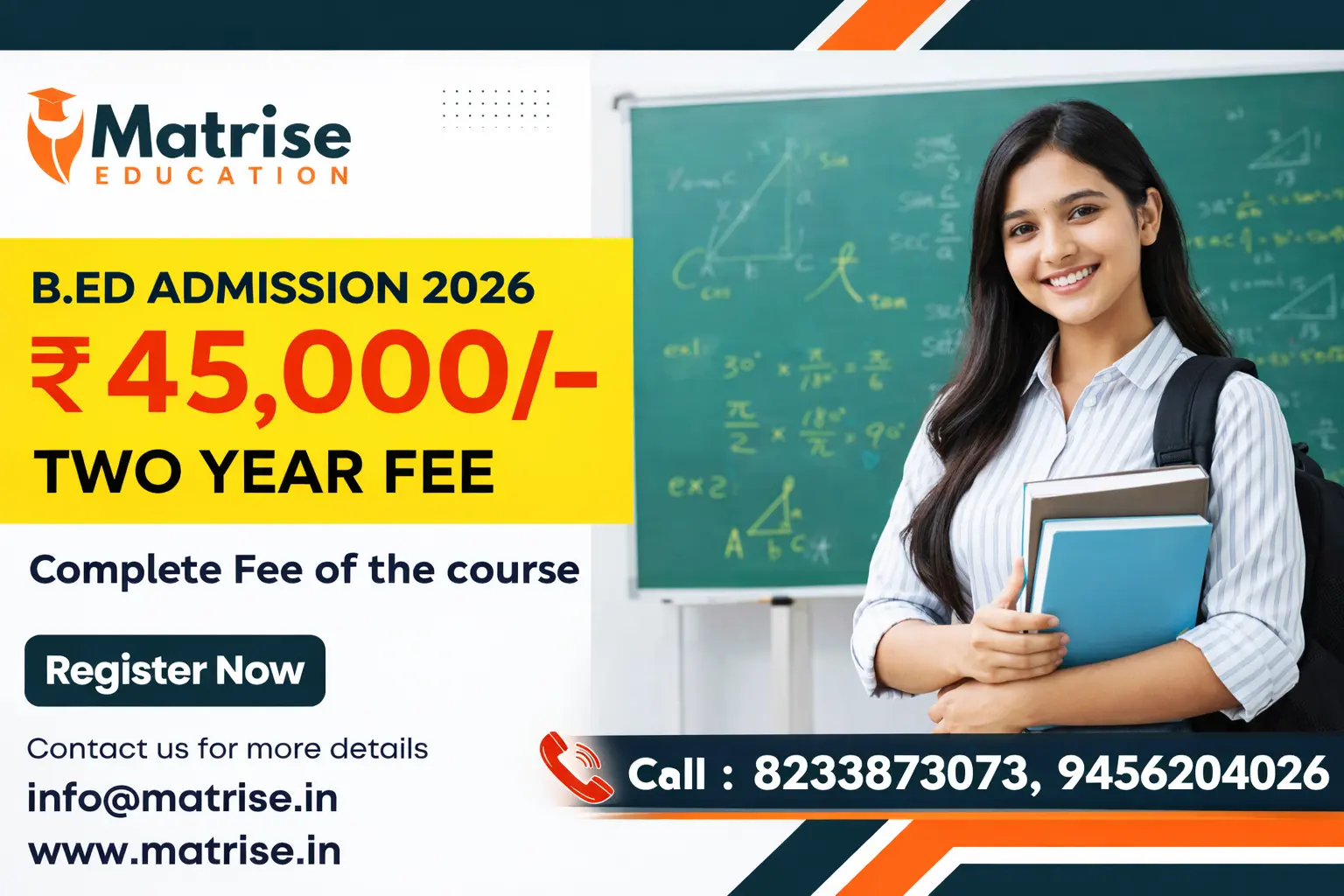
f you want to build a career in teaching, pursuing a Bachelor of Education (B.Ed) is one of the most important steps. Many students search for direct admission in B.Ed in UP to avoid confusion around entrance exams, counselling, and eligibility requirements. This guide explains everything you need to know — eligibility, process, fees, documents, and important tips.
What is B.Ed and Why is it Important?
B.Ed (Bachelor of Education) is a 2-year professional degree required to become a teacher in schools across India. It is mandatory for teaching in primary, secondary, and senior secondary schools and is recognized by NCTE.
Benefits of Doing B.Ed
- Opens career opportunities in government and private schools
- Required qualification for TET, CTET, and other teaching exams
- Enhances teaching skills and classroom management
- Provides stable and respected career options
Can You Get Direct Admission in B.Ed in UP?
Yes, direct admission in B.Ed in UP is possible in many private colleges based on merit (graduation marks) if seats remain vacant after state counselling.
However, government colleges usually admit students through the UP B.Ed JEE entrance exam only.
👉 Private colleges may offer management quota or merit-based seats for direct admission.
Eligibility Criteria for B.Ed Admission in UP
To apply for direct admission, you must meet these requirements:
- Graduation or post-graduation from a recognized university
- Minimum 50% marks (45% for reserved categories in some colleges)
- No age limit in most institutions
- Students from any stream (BA, BSc, BCom, MA, MSc, etc.) are eligible
Direct Admission Process in UP
Follow these steps to secure admission:
- Research and shortlist approved B.Ed colleges
- Check seat availability for direct admission
- Fill application form of the college
- Submit required documents
- Pay admission/registration fee
- Confirm admission letter
Documents Required For B.Ed Admission in UP
Keep these documents ready:
- Graduation mark sheets and certificates
- 10th and 12th certificates
- Transfer certificate (TC)
- Migration certificate (if applicable)
- Aadhaar card or ID proof
- Passport size photographs
- Caste certificate (if applicable)
B.Ed Course Fees in UP
Fees vary depending on the college type:
- Government colleges: ₹10,000 – ₹25,000 per year
- Private colleges: ₹50,000 – ₹1,20,000 per year
- Management quota: May be higher
Top Career Opportunities After B.Ed
After completing B.Ed, you can work as:
- School teacher (Primary / TGT / PGT)
- Private tutor or coaching instructor
- Education consultant
- Content developer
- School administrator
You can also prepare for UPTET, CTET, DSSSB, and government teacher recruitment exams.
Tips to Choose the Right College
- Check NCTE approval and university affiliation
- Look at placement and faculty quality
- Compare fees and infrastructure
- Read student reviews
- Check internship and training opportunities
Is Direct Admission Safe and Valid?
Yes, direct admission is valid only if the college is NCTE approved and affiliated to a recognized university. Always verify credentials before paying fees.
Avoid agents promising guaranteed government college seats without counselling — this is not legitimate.
Conclusion
Getting direct admission in B.Ed in UP is a good option for students who want to start their teaching career without waiting for entrance exams. By choosing a recognized college and ensuring proper documentation, you can smoothly begin your journey toward becoming a qualified teacher.
Can I join without any entrance exam?
Yes, you can join B.Ed without an entrance exam in some private colleges in UP through merit-based or management quota seats if you meet the eligibility criteria and seats are available.
Is BEd available in IGNOU?
Yes, B.Ed is available at Indira Gandhi National Open University (IGNOU) through a distance learning mode, but admission is granted only through an entrance exam.
Can B.Ed. be done open?
Yes, B.Ed can be done through open/distance mode from recognized universities like IGNOU, but only if you meet eligibility and clear the entrance exam.
Can a person do B.Ed. without graduation?
No, you cannot do B.Ed without completing a graduation degree from a recognized university, as it is a mandatory eligibility requirement.
Which courses don’t need an entrance exam?
Many courses in India offer admission without an entrance exam, mainly based on merit (marks in previous qualification). Here are common options:
Courses That Usually Don’t Require Entrance Exams
BA (Bachelor of Arts)
BCom (Bachelor of Commerce)
BSc (Bachelor of Science) in many colleges
BBA in private colleges
BCA in private colleges
Diploma courses (Polytechnic, ITI, skill diplomas)
B.Ed in some private colleges (merit/direct admission)
MA, MCom, MSc in many universities (merit-based)
Certificate courses (Computer, Digital Marketing, Language courses)
Distance learning courses (IGNOU and other open universities)
✅ Admission is usually based on 12th or graduation marks depending on the course.